

The Evolution of Edge AI Across Smart City Infrastructure
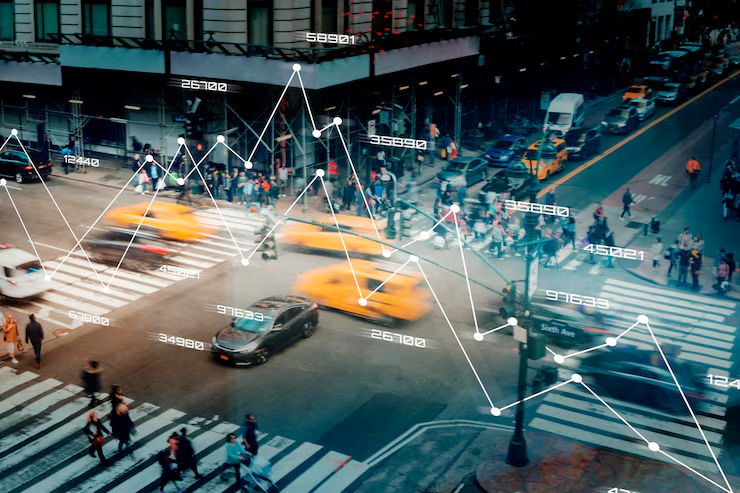
Cities around the world are becoming increasingly connected through digital infrastructure designed to improve mobility, safety, sustainability, and service delivery. One of the most important technologies enabling this transformation is Edge AI. Unlike traditional cloud centered systems that rely on centralized processing, Edge AI allows data to be analyzed directly at or near the source where it is generated. This shift supports faster decision making, reduces network congestion, and improves reliability across urban environments.
As smart city initiatives expand, Edge AI is playing a growing role in managing traffic flow, monitoring environmental conditions, improving public safety systems, and optimizing energy distribution networks. Its evolution reflects a broader movement toward decentralized intelligence that supports real time urban responsiveness.
Understanding how Edge AI has developed and where it is being applied helps explain its importance in modern smart city infrastructure.
Understanding Edge AI in the Context of Smart Cities
Edge AI refers to artificial intelligence systems that operate on devices located close to where data is collected rather than relying entirely on centralized cloud servers. These devices include sensors, cameras, gateways, and embedded processors distributed throughout urban infrastructure.
Edge AI enables cities to:
- analyze data locally
- reduce processing delays
- support faster response times
- enhance data privacy protections
- lower bandwidth requirements
This decentralized architecture allows urban systems to function more efficiently even when connectivity conditions vary.
Local processing supports real time decision making across city networks.
Early Foundations of Smart City Intelligence Systems
Initial smart city technologies relied heavily on centralized computing platforms that collected large volumes of sensor data and transmitted it to remote data centers for processing. While this model enabled basic monitoring capabilities, it created challenges related to latency and scalability.
Early limitations included:
- delayed response times during congestion events
- high network bandwidth usage
- reduced resilience during connectivity interruptions
- limited capacity for real time automation
These challenges motivated the transition toward distributed intelligence systems supported by Edge AI.
Decentralization improved operational responsiveness across city services.
Growth of Internet of Things Networks Supporting Edge AI Deployment
The expansion of Internet of Things networks provided the foundation for Edge AI adoption across urban environments. Connected devices installed throughout cities generate continuous streams of data that support infrastructure optimization.
IoT networks support Edge AI through:
- environmental monitoring sensors
- traffic signal controllers
- connected street lighting systems
- public transportation tracking devices
- smart parking infrastructure
These distributed devices create opportunities for localized analytics and automated decision making.
Edge processing improves the value of sensor networks significantly.
Role of Edge AI in Intelligent Traffic Management Systems
Traffic congestion represents one of the most visible challenges in urban environments. Edge AI systems help cities respond dynamically to changing transportation conditions by analyzing traffic patterns locally.
Traffic optimization applications include:
- adaptive signal timing adjustments
- congestion detection at intersections
- pedestrian movement monitoring
- emergency vehicle prioritization support
- incident detection on major roadways
Real time analytics improve travel efficiency while reducing delays across transportation corridors.
Edge AI strengthens coordination between transportation systems.
Enhancing Public Safety Through Edge Based Video Analytics
Public safety infrastructure increasingly relies on intelligent video analytics supported by Edge AI processing. Cameras equipped with embedded analytics capabilities can interpret events as they occur rather than transmitting raw footage for centralized review.
Edge video analytics support:
- anomaly detection in public spaces
- crowd density monitoring
- emergency response coordination
- infrastructure security monitoring
- incident alert generation
Local processing improves response speed during time sensitive situations.
Real time situational awareness strengthens urban resilience.
Environmental Monitoring and Sustainability Applications
Cities face growing pressure to manage air quality, noise levels, and energy consumption efficiently. Edge AI systems support environmental monitoring by processing sensor data close to collection points.
Environmental applications include:
- air quality tracking across neighborhoods
- noise level monitoring near transportation corridors
- water usage pattern analysis
- waste management optimization
- climate resilience planning support
Localized analytics improve the accuracy and responsiveness of sustainability programs.
Environmental intelligence supports healthier urban living conditions.
Smart Energy Infrastructure Supported by Edge AI
Energy distribution networks are becoming increasingly complex as cities integrate renewable energy sources and manage changing consumption patterns. Edge AI systems help balance energy supply and demand efficiently.
Smart energy applications include:
- grid load balancing support
- renewable energy integration coordination
- outage detection automation
- predictive maintenance for infrastructure components
- consumption trend monitoring
These capabilities improve reliability across urban energy systems.
Decentralized analytics support efficient resource management.
Role of Edge AI in Smart Public Transportation Systems
Public transportation networks generate large volumes of operational data that can benefit from real time processing. Edge AI systems help optimize transit performance by analyzing passenger flow and vehicle movement patterns.
Transportation improvements include:
- route optimization support
- passenger density monitoring
- schedule adjustment recommendations
- vehicle maintenance prediction
- service reliability tracking
Improved transit efficiency supports sustainable mobility goals.
Real time analytics enhance commuter experiences.
Privacy Advantages of Edge AI in Urban Data Systems
Privacy concerns remain an important consideration in smart city development. Edge AI helps address these concerns by reducing the need to transmit sensitive data to centralized servers.
Privacy benefits include:
- localized data processing
- reduced transmission of raw video streams
- selective data sharing across networks
- improved compliance with regulatory frameworks
- stronger citizen trust in digital infrastructure
Privacy sensitive design strengthens long term smart city adoption.
Local intelligence supports responsible data management practices.
Edge AI Supporting Emergency Response Coordination
Emergency response systems require fast decision making during critical situations. Edge AI enhances coordination by enabling immediate analysis of sensor inputs across affected areas.
Emergency response applications include:
- disaster detection support
- evacuation route monitoring
- infrastructure damage assessment
- first responder coordination assistance
- hazard identification across transportation networks
Rapid response capabilities improve public safety outcomes.
Distributed intelligence strengthens emergency preparedness.
Integration of Edge AI With 5G Connectivity Infrastructure
The deployment of 5G connectivity networks has accelerated the adoption of Edge AI technologies across urban environments. High speed communication supports coordination between distributed devices and centralized management systems.
5G supported Edge AI advantages include:
- faster data transmission between nodes
- improved device coordination efficiency
- reduced network latency
- enhanced mobile infrastructure integration
- stronger support for autonomous system operations
Connectivity improvements expand the potential of decentralized analytics systems.
High performance networks strengthen smart city scalability.
Challenges Associated With Deploying Edge AI in Cities
Despite its benefits, Edge AI deployment requires careful planning and infrastructure investment. Cities must address technical and operational challenges during implementation.
Common challenges include:
- device maintenance requirements
- cybersecurity protection needs
- integration with legacy infrastructure systems
- interoperability between technology vendors
- workforce training for digital infrastructure management
Addressing these challenges supports successful long term adoption.
Strategic planning strengthens deployment effectiveness.
Role of Edge AI in Predictive Infrastructure Maintenance
Predictive maintenance represents one of the most valuable applications of Edge AI in smart cities. Sensors embedded in infrastructure components detect performance changes before failures occur.
Predictive maintenance applications include:
- bridge condition monitoring
- roadway surface wear detection
- utility network performance tracking
- street lighting reliability monitoring
- public transportation equipment diagnostics
Early detection reduces maintenance costs and improves service continuity.
Proactive monitoring strengthens infrastructure resilience.
Citizen Services Enhanced by Edge AI Applications
Smart city infrastructure aims not only to improve operations but also to enhance quality of life for residents. Edge AI systems support service delivery improvements across multiple sectors.
Citizen focused applications include:
- smart parking availability guidance
- adaptive public lighting adjustments
- digital signage updates based on real time conditions
- waste collection route optimization
- public facility usage monitoring
Improved services strengthen community satisfaction.
Responsive infrastructure supports urban livability goals.
Future Directions for Edge AI in Smart City Development
Edge AI technologies continue evolving as computing hardware becomes more efficient and machine learning models improve in accuracy.
Future developments may include:
- autonomous traffic coordination systems
- advanced environmental prediction platforms
- distributed energy trading networks
- intelligent infrastructure self repair monitoring
- integrated multimodal transportation coordination
These innovations will further strengthen decentralized intelligence across urban environments.
Edge AI will remain central to future smart city strategies.
Conclusion
The evolution of Edge AI across smart city infrastructure reflects a broader shift toward decentralized intelligence capable of supporting real time decision making across complex urban systems. By enabling localized analytics in transportation networks, environmental monitoring systems, public safety platforms, and energy distribution infrastructure, Edge AI improves responsiveness while reducing reliance on centralized processing.
As cities continue integrating connected devices and advanced communication networks, Edge AI will play an increasingly important role in supporting efficient service delivery, infrastructure resilience, and citizen engagement. Strategic deployment of decentralized intelligence systems will remain essential for building sustainable and adaptable urban environments in the years ahead.
Frequently Asked Questions
1. How does Edge AI differ from traditional cloud based artificial intelligence systems
Edge AI processes data locally near collection points, while cloud based systems rely on centralized servers located farther from sensor networks.
2. Can Edge AI operate effectively during network connectivity disruptions
Yes, localized processing allows Edge AI devices to continue functioning even when communication with central systems is temporarily unavailable.
3. What types of hardware support Edge AI deployment in smart cities
Common hardware includes embedded processors, smart sensors, gateway devices, and connected surveillance systems capable of running machine learning models locally.
4. Does Edge AI reduce operational costs for city infrastructure management
Localized analytics can reduce bandwidth usage and improve maintenance efficiency, which supports long term operational cost optimization.
5. How does Edge AI improve traffic signal coordination
Edge processing allows intersections to analyze vehicle flow patterns in real time and adjust signal timing dynamically.
6. Are Edge AI systems scalable across large metropolitan areas
Yes, distributed device networks allow cities to expand Edge AI capabilities gradually as infrastructure evolves.
7. What role do universities and research institutions play in Edge AI smart city development
Academic institutions contribute research expertise, testing environments, and workforce training programs that support innovation in urban intelligence systems.